
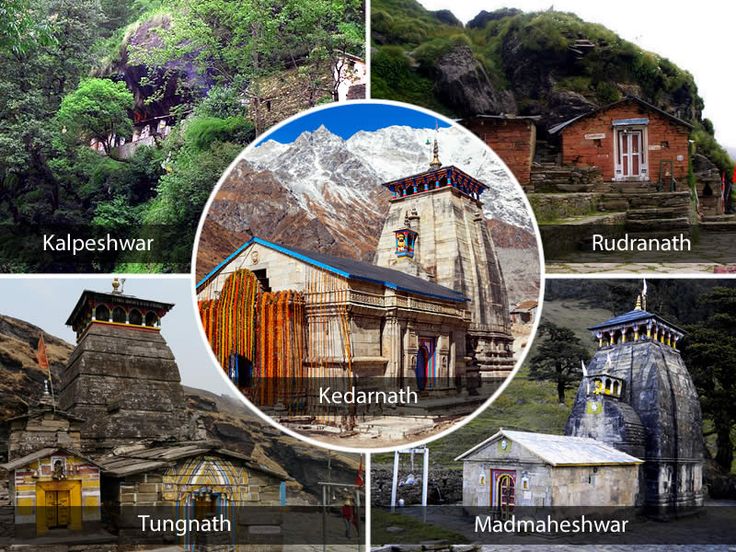
The Panch Kedar refers to five sacred temples of Lord Shiva located in the Garhwal Himalayas of Uttarakhand — Kedarnath, Madhmaheshwar, Tungnath, Rudranath, and Kalpeshwar. Each shrine carries a deep mythological significance linked to the Pandavas of the Mahabharata. Legend says that Lord Shiva, avoiding the Pandavas, took the form of a bull and disappeared into the ground. His body parts reappeared in different places — the hump at Kedarnath, the arms at Tungnath, the face at Rudranath, the navel at Madhmaheshwar, and the hair at Kalpeshwar — forming the Panch Kedar.
The yatra is not just a spiritual journey but also a trek through some of the most pristine and remote Himalayan landscapes. The route passes through dense forests, alpine meadows, glacial valleys, and high-altitude villages, offering panoramic views of peaks like Chaukhamba, Nanda Devi, and Trishul. Each temple sits at a unique altitude — from Kalpeshwar at 7,217 ft (accessible year-round) to Tungnath at 12,073 ft, the highest Shiva temple in the world.
Undertaking the Panch Kedar Yatra usually takes 9–10 days, combining long drives and treks ranging from easy to moderately difficult. The best time to embark on this spiritual and adventurous journey is May to June and September to October, when the weather is favorable.
For devotees and trekkers alike, Panch Kedar is a soulful blend of mythology, divinity, and Himalayan beauty — a pilgrimage that cleanses the spirit while testing the body’s endurance.
Overview
The Panch Kedar are five sacred Shiva temples nestled in Uttarakhand’s Himalayas — Kedarnath, Madhmaheshwar, Tungnath, Rudranath, and Kalpeshwar. Each shrine is tied to a legend of Lord Shiva’s manifestation, forming a spiritual circuit that blends mythology, devotion, and Himalayan beauty. The yatra takes you across dense forests, alpine meadows, and high-altitude trails, offering both divine blessings and breathtaking views.
